
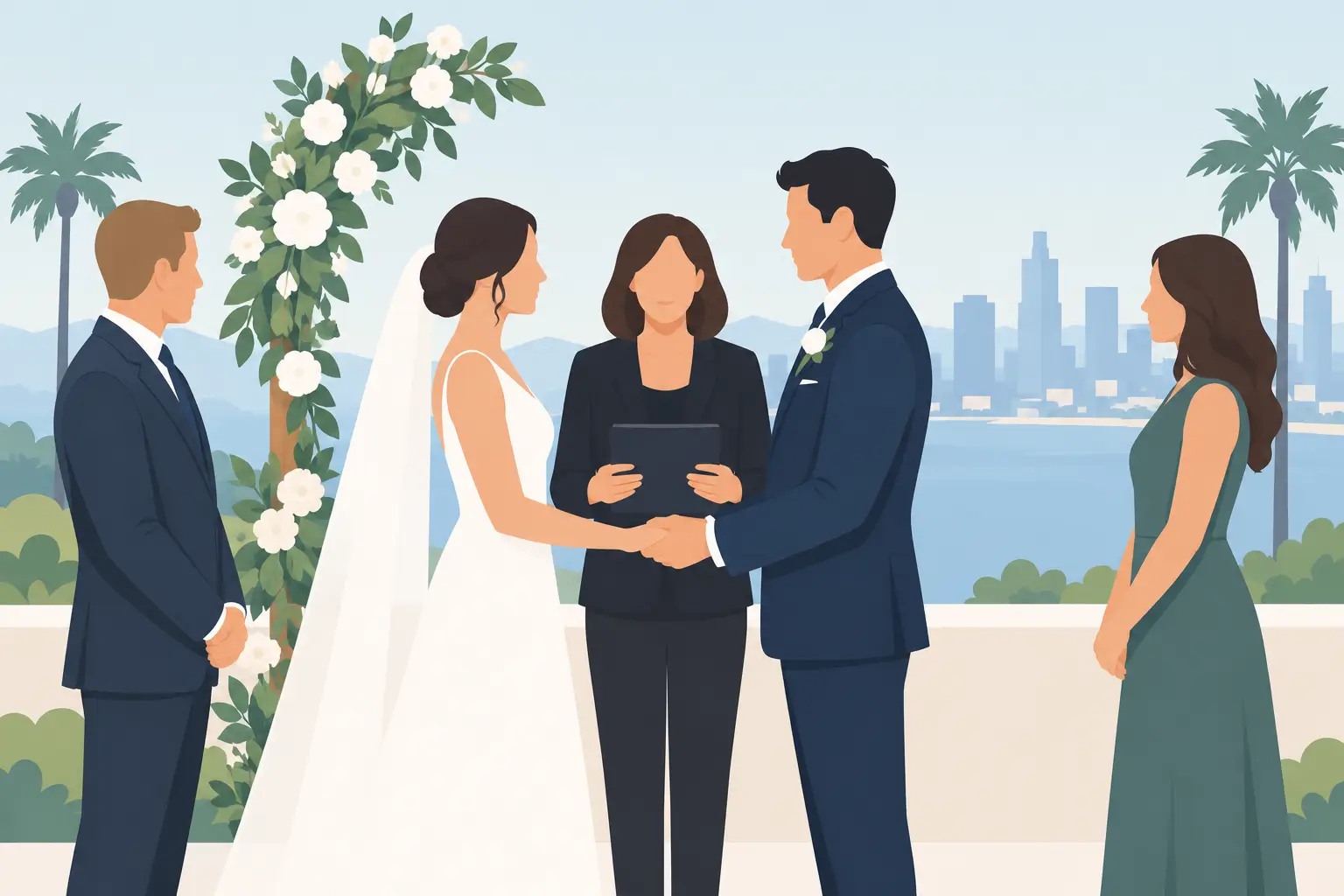
A beautiful Los Angeles elopement can be planned in minutes, but the legal details still matter. Wedding witness requirements California couples encounter depend on one key decision: whether you are marrying with a public or confidential marriage license. Choose the right license, bring the right people into the room, and your ceremony can move from “we’re doing this” to legally married without a last-minute scramble.
Wedding Witness Requirements California Couples Need to Know
For a California public marriage license, at least one witness must be present at the ceremony and sign the marriage license or certificate afterward. California provides space for up to two witnesses. One is legally required; a second is optional.
This signature is not ceremonial decoration. It is part of the record that supports the legal solemnization of your marriage. The officiant completes their portion, you and your partner sign where required, and your witness signs in the witness section before the completed document is returned for county recording.
For a confidential marriage license, witnesses are not required. Only the two people getting married and the authorized officiant sign the confidential marriage license. That difference makes confidential licenses appealing to couples who want a very private ceremony or simply do not have someone available to witness the marriage.
The license type changes the witness rule, so do not assume every California wedding follows the same process.
Public License: Bring One Witness, or Two
A public marriage license is the option most couples recognize. It creates a public record after it is recorded, and it can be used anywhere in California during its validity period. If you choose this license, plan on having at least one real person, physically present for your ceremony, who can sign as a witness.
Your witness should not be the person officiating the ceremony. California requires the witness signature to come from someone other than the person solemnizing the marriage. In practical terms, that means your officiant cannot fill the witness role too.
Your witness can be a close friend, sibling, parent, adult child, coworker, travel companion, or another trusted person who is there to see you marry. They do not need to be related to you, live in California, or hold U.S. citizenship. They are not responsible for approving your marriage or proving that they know your relationship. Their role is to witness the ceremony and sign accurately.
You may have two witnesses if that feels right for your moment. Some couples ask both parents to sign. Others choose a best friend and the person who introduced them. Legally, though, a larger guest list does not create a larger witness requirement. One qualified witness is enough for a public-license ceremony.
Does a Witness Need to Be 18?
California’s statewide marriage statutes do not set a separate minimum age for a marriage witness. Still, ceremony providers and county processes may have their own practical policies around a minor signing a legal document. If your only available witness is under 18, ask before the ceremony rather than finding out at signing time that another adult is needed.
For the smoothest same-day experience, choose an adult witness who can arrive on time, remain through the signing, and clearly provide the information requested on the license. A witness who leaves after photos but before paperwork can delay a ceremony that was otherwise ready to go.
Can We Ask a Stranger to Witness Our Wedding?
Possibly, but it is better not to make your legal marriage depend on luck in a parking lot or courthouse hallway. A witness must be present for the ceremony, willing to sign, and available at the exact moment paperwork is completed.
If you are eloping in Los Angeles without guests, solve the witness question before your appointment. An experienced marriage service can explain the available options based on your license type and ceremony plan. At Same-Day Marriage, couples can receive guidance through the license, ceremony, signing, recording, and certified-document process in one coordinated visit.
Confidential License: No Witnesses Required
A confidential marriage license eliminates the witness requirement. It is designed for couples who meet California’s eligibility standard for this license, including affirming that they are already living together as spouses. You do not need a public audience, and the completed record is not publicly searchable in the same way as a public marriage record.
That privacy is meaningful for many couples. You may be planning a quiet chapel ceremony, keeping your marriage off social media for now, marrying before military orders, or making a personal commitment without an audience. A confidential license can support that choice without reducing the legal validity of the marriage.
There is a trade-off. Because confidential marriage records have restricted access, obtaining certified copies later follows different rules than public records. The best choice is not always the license with fewer steps. It is the license that accurately fits your circumstances, privacy preferences, and document needs after the ceremony.
Both public and confidential licenses are generally valid for 90 days from issuance in California. Neither lets you marry before the license is issued, and neither should be treated as paperwork to finish later. The license must be properly completed after the ceremony and returned for recording.
What Your Witness Actually Does
A witness does not need to deliver a toast, stand in front of a camera, or say anything during your vows. They can be part of a full wedding party or quietly sit nearby during a two-person-style elopement. What matters is that they are there to observe the marriage ceremony and sign the completed document when directed.
The timing matters. Do not pre-sign the license before the ceremony. Do not send it home with a witness to sign later. Marriage paperwork should be completed carefully at the ceremony, using the names and details exactly as they appear on the license.
A misspelled name, signature in the wrong space, blank required field, or missing witness signature can create avoidable work after one of the biggest days of your life. This is why a calm, organized signing process is worth more than rushing through the final two minutes.
A Simple Witness Plan for a Same-Day Wedding
If you are getting married today, decide on the license before you pick your witness. A public license means you need one witness. A confidential license means you may not need one, provided you qualify.
For a public-license ceremony, confirm these points in advance:
- Your chosen witness can attend the actual ceremony, not just the photo session.
- They understand they will sign a legal marriage document after the vows.
- They will stay until the officiant confirms the paperwork is complete.
- You have a backup person in mind if travel, traffic, work, or nerves interfere.
This is especially useful for mobile weddings. A beach ceremony, hotel elopement, backyard celebration, or scenic Los Angeles overlook can be deeply personal, but the paperwork rules travel with you. If a public license is in use, your witness must be physically there when the marriage is solemnized.
Common Witness Mistakes That Can Slow Things Down
The biggest mistake is arriving with a public marriage license plan but no witness. The second is assuming a photographer, planner, driver, or officiant automatically counts. A photographer or planner may be able to serve as a witness if they are present and willing to sign, but you should confirm that role ahead of time. Your officiant, however, cannot serve as the required witness.
Another mistake is confusing guests with legal witnesses. Ten loved ones can attend your ceremony, but the document still needs the proper signature in the proper place. Conversely, a wedding with no guests beyond one witness can be fully legal, heartfelt, and photo-worthy.
Finally, do not confuse a marriage license with certified proof of marriage. Your signed license is the document used for county recording. A certified copy of the recorded marriage certificate is what many couples later need for name changes, benefits, insurance, immigration matters, or other official updates. Ask how recording and certified copies will be handled before you begin.
Make Room for the Legal Moment
The right witness is not a bureaucratic extra. For a public-license wedding, that person is present for the instant your commitment becomes a legal California marriage. Choose someone dependable, keep them close through the signing, and let the rest of the day belong to the two of you.