
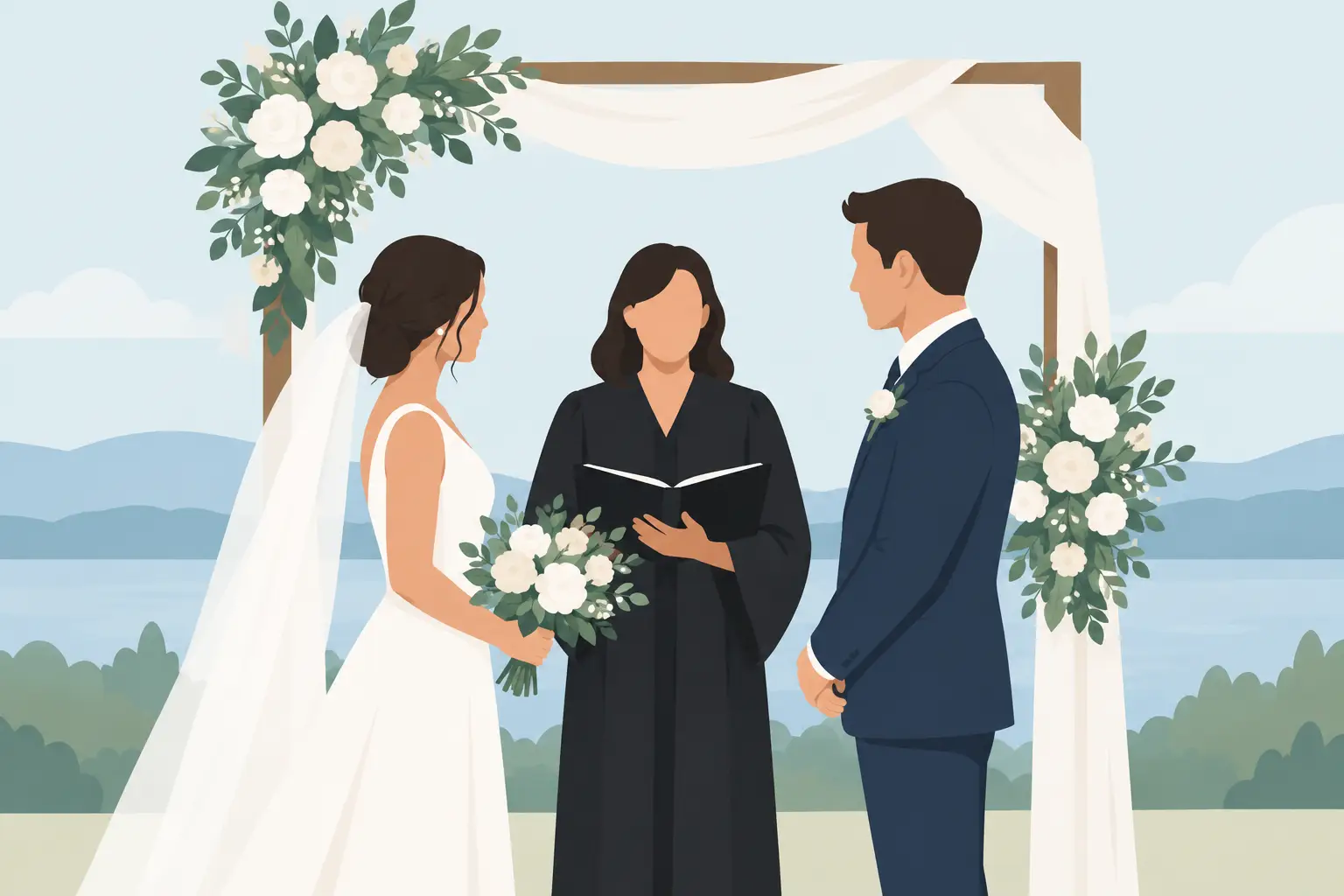
A wedding officiant does more than stand at the front of a ceremony and say a few meaningful words. In California, the officiant is a key part of turning your commitment into a legal marriage. When time matters – whether you are eloping, preparing for military orders, handling a benefits deadline, or simply ready to marry now – choosing the right person can determine whether your day feels easy or becomes a paperwork problem.
For couples in Los Angeles, the goal is usually both simple and significant: have a ceremony that feels like you, complete every legal requirement correctly, and leave knowing the marriage process is moving forward. That takes more than a beautiful setting. It takes an authorized officiant who understands licenses, signatures, county procedures, and the details that cannot be fixed by a great photo alone.
What a Wedding Officiant Actually Does
A wedding officiant leads the legal marriage ceremony. They confirm that the couple is ready to marry, guide the declaration of intent, oversee the signing of the marriage license, and complete the officiant portion of the document. After the ceremony, the license must be returned for recording according to the applicable county process.
The ceremony itself can be short, heartfelt, private, traditional, bilingual, spiritual, secular, or somewhere in between. California does not require a particular script, a large audience, or a costly venue. What matters is that the legal elements are present and the person performing the ceremony is authorized to do so.
That distinction matters when couples are trying to get married quickly. A friend may be able to create a memorable moment, but they may not be legally authorized, may not understand the license requirements, or may make an error that delays recording. A professional officiant brings calm to a process that has real legal consequences.
A Legal Ceremony Needs More Than Vows
Your vows are the heart of the day, but they are not the whole legal process. Before a ceremony can create a valid marriage, you need a valid California marriage license. The license must be issued before the ceremony, and the ceremony must take place before the license expires.
During the ceremony, both partners must be present and consent to marry. The officiant then completes the required documentation. For a public marriage license, California generally requires at least one witness signature, with space for a second witness if you want one. Confidential marriage licenses work differently and do not require witnesses, but couples must meet the eligibility requirements for that license type.
Afterward, the license is returned to the proper county office for recording. Recording is the administrative step that creates the official county record of your marriage. A ceremonial certificate you receive at the chapel can be a wonderful keepsake, but it is not the same as a certified copy of the recorded marriage record. Certified copies are the documents commonly requested for name changes, immigration matters, insurance, military benefits, and other official purposes.
A dependable officiant should be able to explain this in plain language. You should never have to guess whether the right form was signed, where it goes next, or what document you will need after the wedding day.
How to Choose the Right Wedding Officiant in Los Angeles
The best choice depends on what you need most. Some couples want a full wedding experience with readings and family participation. Others need a private, efficient legal ceremony before a flight, deployment, surgery, courthouse deadline, or major life change. Both deserve care and legal precision.
Start by asking whether the officiant is authorized to solemnize marriages in California and whether they regularly complete California marriage paperwork. Experience is not just about delivering a polished ceremony. It is about recognizing the difference between a public and confidential license, knowing when witnesses are required, completing forms accurately, and returning documents without unnecessary delay.
Then consider the service model. If you already have a license and a venue, an officiant-only service may be right for you. If you need everything handled quickly, a provider that can arrange the marriage license, officiation, recording support, and certified-copy guidance in one coordinated process can remove several stressful steps.
Location is another practical question. A ceremony can take place in a chapel, at home, in a hotel, at a park, or at another approved private location. Mobile ceremonies offer flexibility, but travel time, parking, permits, and weather can affect the plan. A chapel ceremony may be the faster choice when you need privacy, an elegant setting, and fewer moving parts.
Questions Worth Asking Before You Book
A quick conversation before booking can protect your plans. Ask whether the officiant can perform your ceremony on your preferred date and location, what identification and license documents you need, and who will manage the completed license after the ceremony.
You should also ask how personalized the ceremony can be. A short legal ceremony does not have to feel cold. Many couples choose a concise exchange of vows, rings, and a personal declaration while keeping the process fast. If Spanish-language officiation matters to you or your family, confirm that before the day arrives rather than assuming it will be available.
For international couples and visitors, clarity is especially valuable. Being from another state or another country does not automatically prevent you from marrying in Los Angeles, but identification, document needs, and your plans for using the marriage record at home may affect what you should prepare. A knowledgeable service can help you understand the local marriage process while avoiding promises that do not fit your specific situation.
Why Timing Changes the Officiant Decision
When a wedding is months away, you can compare ceremony styles, attend venue tours, and build a detailed timeline. When you need to get married today, the order of operations matters more: secure the license, complete the legal ceremony, ensure the paperwork is handled correctly, and understand when certified proof will be available.
That is why a wedding officiant who works within an end-to-end marriage service can be a practical advantage. Instead of coordinating a county appointment, a separate officiant, witnesses, and recording instructions on your own, you can work with one team that understands the complete process.
Same-Day Marriage serves couples who need that certainty in Los Angeles, offering a coordinated path from license and ceremony through county recording support. The experience can still be intimate and photo-worthy, whether you choose a chapel elopement, a VIP room, or a mobile ceremony at a location that matters to you.
Speed should never mean carelessness. If someone tells you that paperwork does not matter, that a license can be handled later, or that any informal ceremony is automatically legal, take that as a warning sign. Marriage is personal, but the legal record is precise. The right officiant respects both.
Make the Ceremony Feel Like Yours
Legal does not have to mean generic. A two-minute ceremony can include a pause to look at each other, a few words about your story, ring vows, a kiss, and the joyful announcement that you are married. A longer ceremony can include family, readings, music, cultural traditions, and bilingual elements.
Think about what you will remember after the paperwork is finished. Maybe it is the quiet relief of marrying privately. Maybe it is having your children present, bringing your dog, or saying vows with the Los Angeles skyline in the background. Let the officiant know what matters most, but keep the must-haves realistic for your timeframe and location.
The right wedding officiant gives you more than a ceremony script. They give you confidence that the promise you make today is honored emotionally, completed legally, and ready for the life you are building together.