
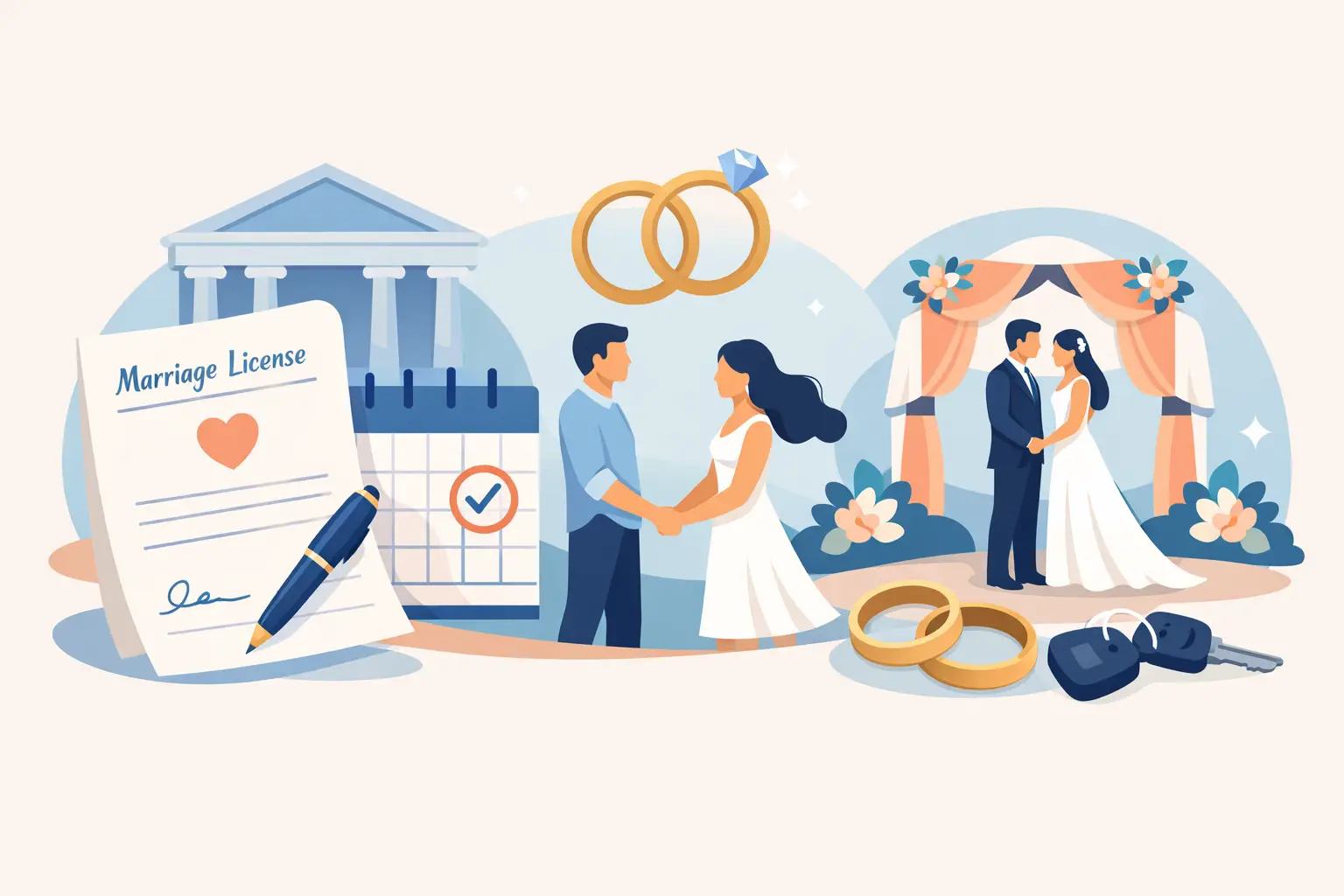
A surprise deployment date. A courthouse appointment that is weeks away. A long-planned Los Angeles getaway that suddenly feels like the right moment to elope. Whatever brought you here, the question is practical and personal at once: can you get a marriage license and become legally married today?
For many couples, the answer is yes. California does not require residency, citizenship, or a blood test to marry here. But a legal marriage still has essential steps: obtaining the license, having an authorized ceremony, completing the license correctly, and getting it recorded. Knowing how those pieces fit together can turn a stressful deadline into a joyful, photo-worthy day.
What a Marriage License Actually Does
A marriage license is permission from the county for two people to marry. It is not, by itself, proof that you are married. You become legally married after an authorized person performs your ceremony and completes the license according to California rules.
That distinction matters when time is tight. Picking up a license from a county office is only one stop in the process. You still need an officiant, witnesses for a public license, proper completion of the paperwork, and county recording. If any part is delayed or handled incorrectly, it can affect when you can obtain a certified copy of your marriage record.
A California marriage license is generally valid for 90 days from issuance and can be used anywhere in California. There is no waiting period after it is issued, which means the ceremony can happen the same day. For couples who are ready now, that is the key detail: you do not have to wait days or weeks between the license and the “I do.”
What to Prepare Before Applying
Both partners generally need to appear when applying for a public marriage license. Bring valid government-issued photo identification and be ready to provide accurate personal details, including your full legal name, date and place of birth, and information about your parents as requested on the application.
If either of you was previously married, expect to provide details about how and when that marriage ended. The county may ask for the date of dissolution, death, or annulment. Do not guess. Take a moment to confirm the information before you apply, especially if you are working around a legal deadline or travel schedule.
Age is another non-negotiable. Couples must meet California’s legal age requirements to marry without additional court processes. If either partner is under 18, do not assume a standard same-day process applies. Minor marriage cases involve court approval and extra requirements that need separate planning.
International couples and visitors from other states can marry in Los Angeles. You do not need to be a California resident, and you do not need to be a U.S. citizen. Your marriage license is issued under California law, so your ceremony must take place in California. If you plan to use your marriage documents abroad, ask early about certified copies and whether an apostille may later be needed.
There are also public and confidential marriage licenses. A public license creates a public record and typically requires at least one witness at the ceremony. A confidential license is not public, but it has its own eligibility requirement: the couple must attest that they are already living together as spouses. The best choice depends on your privacy needs and circumstances, not just speed.
The Ceremony Is the Legal Turning Point
Your ceremony can be short, intimate, and still fully meaningful. California does not require a large venue, a reception, or a long script. You can marry in a chapel, at a private location, or at a meaningful Los Angeles setting, as long as the ceremony is conducted by someone authorized to solemnize marriages in California.
For a public marriage license, your officiant and witness or witnesses sign the license after the ceremony. The officiant then completes their section and returns the original license for recording. California generally requires the person who solemnizes the marriage to return the completed license to the county recorder within 10 days.
This is why choosing an experienced officiant matters. A beautiful ceremony is only half the job. Names must match the license, signatures need to go in the correct places, and the completed document must be submitted promptly. A typo or missing signature can create an unnecessary delay when you need proof of marriage for benefits, immigration filings, insurance, military orders, or a name-change process.
How Same-Day Marriage Services Save Time
The traditional courthouse route can work well when you have flexible schedules and an available appointment. But it can also mean separate locations, long lines, limited ceremony times, and uncertainty about when you will receive your documentation.
A full-service same-day option combines the legal steps in one coordinated plan. Same-Day Marriage can help eligible couples obtain a license, complete an authorized ceremony, handle county recording, and receive support with certified proof of marriage without sending them from one office to another. It is an especially practical choice for elopements, visitors, military couples, LGBTQ+ couples, and anyone facing an urgent personal or legal deadline.
Speed should never mean skipping legal details. Before booking, confirm exactly what your package includes: license issuance, officiation, witness arrangements if needed, location or chapel access, county recording, and certificate support. If you want a mobile ceremony, confirm travel timing and whether your chosen location is accessible and appropriate for the ceremony.
The experience can still feel like your wedding. Some couples want a quick private exchange of vows. Others want a small chapel ceremony, a Spanish-language officiant, a VIP room, or a few photographs before heading to dinner as newlyweds. The legal process is structured, but the moment itself can be entirely your own.
Marriage License Questions Couples Ask
Can we apply online and get married immediately?
Many counties allow couples to begin an application online, but an online form alone is not a marriage license. You must complete the issuance process with the authorized provider or county office, then have a legal ceremony. If getting married today is the goal, choose a service that coordinates each step rather than treating the online application as the finish line.
Do we need witnesses?
For a public California marriage license, yes, at least one witness is generally required. A confidential license does not require witnesses. If you are eloping alone, ask your ceremony provider whether witness support is available so you are not scrambling at the last minute.
Can we use the license in another state?
No. A California marriage license is for a ceremony performed in California. If you want to marry in Nevada, Arizona, or any other state, you need to follow that state’s licensing rules.
When do we receive proof that we are married?
The completed marriage license is sent for county recording, and a certified copy is the document many agencies will ask you to provide afterward. Timing can depend on the recording process and the type of documentation you need. If proof is urgent, say so before your ceremony and ask what immediate documentation support is available.
Love does not always arrive on a convenient timeline. When you are ready to make it official, choose a process that honors the feeling and handles the paperwork with equal care.