
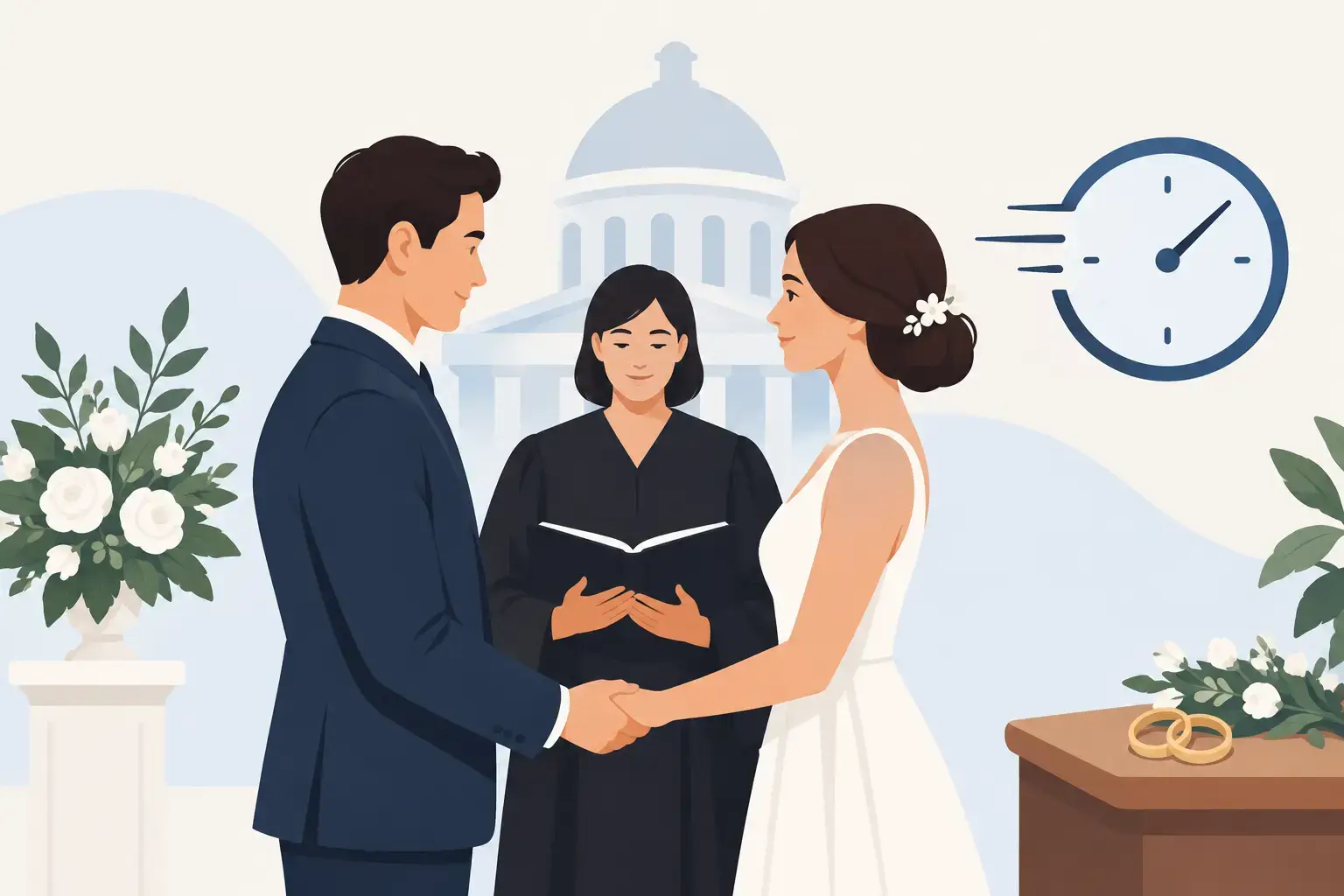
A beautiful venue, a packed guest list, and months of planning are optional. The legal part of marriage is not. When a deadline, deployment, immigration matter, health concern, travel plan, or simply the right moment brings you here, understanding your legal wedding options can turn a stressful day into the day you get married.
In Los Angeles, couples do not have to choose between a large traditional wedding and waiting weeks for a courthouse appointment. You can complete a valid California marriage with the correct license, an authorized ceremony, proper signatures, and county recording. The best path depends on how quickly you need it done, how private you want it to be, and what kind of proof you need afterward.
What Makes a Wedding Legally Valid in California?
A legal marriage has a few non-negotiable steps, whether you marry in a courthouse, a chapel, a backyard, or on a beach. Both partners must be eligible to marry and appear for a California marriage license. The ceremony must be performed by someone authorized to solemnize marriages, with the required witness participation for the type of license issued. Afterward, the completed license is returned for recording with the county.
That sequence matters. A ring exchange, a photographer, a religious blessing, or a celebration alone does not create a legal marriage. The license and completed ceremony paperwork do.
California licenses are generally valid for 90 days from issuance, so a couple may get licensed now and hold the ceremony later. But if you need the marriage effective today, the ceremony must happen after the license is issued and the paperwork must be completed correctly that same day.
Legal Wedding Options for Los Angeles Couples
Courthouse marriage
A courthouse marriage is the route many people think of first. You obtain a marriage license through the county and, if appointments are available, may arrange a civil ceremony with a county official. It can be a practical, low-cost option for couples with flexibility in their schedule.
The trade-off is timing. County offices may have limited appointment inventory, separate steps for licensing and ceremonies, wait times, and rules that can change by location. If you need to marry on a particular day or need personal guidance with every document, the courthouse process may feel more fragmented than expected.
A licensed officiant after obtaining your own license
You can get a marriage license through the county, then hire an authorized officiant to perform your ceremony at a location you choose. This offers more freedom than a courthouse ceremony. Your wedding can be in a home, hotel suite, park, restaurant, or another permitted private setting.
This option works well when you already have a license appointment or have time to coordinate the pieces yourself. You are responsible for confirming that your license is valid, selecting an authorized officiant, arranging witnesses if required, and making sure the completed license is returned promptly for recording. A meaningful ceremony can be simple, but the paperwork cannot be casual.
Chapel elopement
A chapel elopement offers a private, photo-ready setting without the scale or cost of a traditional wedding. Couples can exchange vows with a small number of loved ones, or keep the moment just for themselves. It is a strong choice for spontaneous elopements, destination visitors, and anyone who wants the legal ceremony to feel intentional rather than administrative.
Ask whether the chapel can handle the full legal process or only the ceremony. Some venues provide a lovely space but require you to bring your own license and officiant. Others can coordinate licensing, officiation, completion of the marriage paperwork, and county recording support in one appointment.
Mobile legal ceremony
A mobile ceremony brings the officiant to you. This can be ideal if a hospital visit, work schedule, military timing, family situation, or personal preference makes travel difficult. It also gives couples the freedom to marry somewhere meaningful, from a favorite overlook to a private residence.
Location flexibility comes with practical limits. The location must be safe and accessible for the ceremony, and public spaces may require permits or have restrictions. Travel fees may also apply. Most importantly, do not confuse a scenic location with legal readiness. The license, authorized officiant, signatures, and recording process still apply wherever you say your vows.
Same-day marriage service
For couples who need immediate execution, a same-day marriage service combines the legal steps under one provider. The right authorized service can help issue the license, perform a legal ceremony, complete the required paperwork, submit it for county recording, and explain how to obtain certified proof of marriage.
This is often the clearest answer when the question is not “How do we plan a wedding?” but “Can we legally be married today?” Same-Day Marriage serves Los Angeles couples with this end-to-end approach, including chapel, VIP-room, and mobile ceremony choices. It can be especially helpful for couples who do not want to lose time moving between separate offices, vendors, and appointments.
Choose the License That Fits Your Privacy Needs
California offers public and confidential marriage licenses, and the difference is more than a label. A public marriage license is part of the public record after recording. It generally requires at least one witness at the ceremony, and certified copies can be requested through the appropriate county process by eligible requesters.
A confidential marriage license is designed for couples who want more privacy. It is not available for public inspection, and it has different witness rules. Couples must attest that they are living together as spouses, as required by California law. Certified copies of a confidential record are generally limited to the spouses unless a court order allows otherwise.
Neither option is “more legal” than the other. Both can create a valid marriage when issued and completed properly. Your choice should reflect your circumstances, privacy preferences, and future documentation needs. If you expect an employer, insurer, immigration agency, military office, or another institution to request proof, ask ahead about the certified copy process and timing.
Documents and Details to Confirm Before You Go
Most couples need valid government-issued photo identification, such as a driver’s license, state ID, passport, or military ID. Names on documents should be clear and consistent. If either partner has been married before, be prepared to provide information about when the most recent marriage ended, even though additional paperwork is not always required.
International couples can legally marry in California if they meet the same local licensing requirements. You do not need to be a California resident or a U.S. citizen to marry here. Still, a California marriage certificate is not the same as immigration authorization. If marriage is part of an immigration plan, make sure you understand the separate federal process and the proof you will need.
Military couples should also consider what their command, benefits office, or insurance administrator may require after the wedding. A certified copy of the recorded marriage certificate is often the document that matters for benefits updates, even though the marriage is legally effective once the ceremony and license are properly completed.
Do Not Overlook Recording and Certified Proof
The ceremony is emotionally central, but recording is the administrative finish line. After the officiant completes the marriage license, it must be returned to the county for recording. A commemorative certificate, ceremony keepsake, or photo of the signed license may be meaningful, but it may not satisfy an agency asking for an official certified copy.
If you have a time-sensitive reason for marrying, ask two direct questions before booking: Who handles the county recording, and how will I obtain certified proof of marriage? The answers should be specific. You should know whether recording is included, whether expedited certificate support is available, what identification is needed for a certified copy, and what timeline applies to your situation.
Be cautious of anyone who promises a legal marriage without a valid license or treats filing as an optional extra. Speed is valuable only when the process is complete.
Make the Day Feel Like Yours
A fast legal wedding does not have to feel rushed. You can bring rings, choose personal vows, invite one or two people, request a Spanish-language ceremony, wear what makes you feel like yourselves, and take a few photos afterward. A private ceremony can be deeply personal precisely because it leaves room for the two of you.
If today is the day, focus on the essentials first: bring valid ID, confirm the license plan, make sure an authorized officiant will conduct the ceremony, and understand how recording and certified proof will be handled. Then take a breath, look at your partner, and let the legal details support the reason you came in the first place: to begin married life together.