
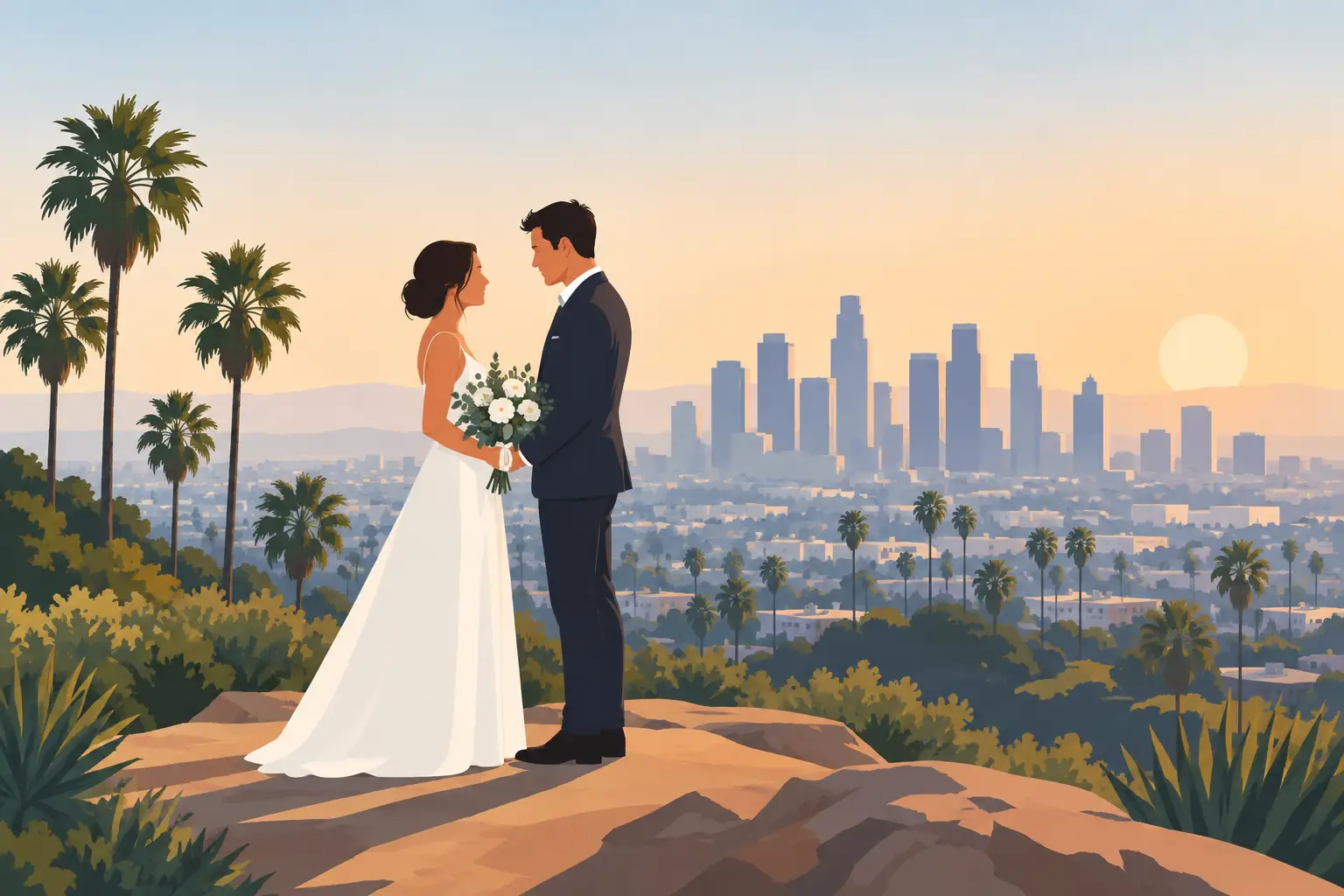
A private elopement can be as simple as two people, an officiant, and a signed marriage license – but the best ones still feel intentional. If you are wondering how to plan a private elopement in Los Angeles, start by deciding what privacy means to you: no guests, a small circle of loved ones, a confidential legal record, or simply a peaceful alternative to a crowded courthouse.
The goal is not to recreate a large wedding on a smaller scale. It is to create a legal, personal marriage moment without the guest list, months of planning, or administrative runaround.
Decide What “Private” Means to You
Private can describe the ceremony itself, your guest count, your location, or the way your marriage record is handled. Clarifying this early helps you choose the right license and ceremony setup.
For some couples, private means a chapel ceremony with just the two of them. For others, it means saying vows at a scenic Southern California location with a photographer and no audience. You may want a handful of immediate family members present, or you may prefer to share the news after you are already married.
There is also an important legal distinction. A confidential marriage license in California is not the same as a private ceremony. A confidential license is generally available to couples who can attest that they are already living together as spouses. It does not require a witness, and access to the marriage record is more restricted. A public marriage license is the more common choice and requires at least one witness to sign after the ceremony.
Your marriage provider can explain which option fits your circumstances. The right choice depends on your privacy needs, not just the size of your celebration.
Choose a Date That Leaves Room to Breathe
One of the advantages of eloping is that you do not need a year-long engagement to make it meaningful. Many couples get legally married within days, or even on the same day, when time matters. Still, choosing a realistic time window gives you room to handle your license, ceremony, photos, and any travel without feeling rushed.
Think about the experience you want. A weekday morning often offers more privacy at public locations and more flexibility with vendors. Sunset creates beautiful photos, but popular beaches, overlooks, and parks can be busy. If you are planning a mobile ceremony, account for Los Angeles traffic and give yourself a cushion between your appointment and your chosen location.
If you have a deadline related to military orders, immigration paperwork, insurance, medical decisions, travel, or a personal milestone, say so upfront. A qualified marriage service can help organize the legal steps in the correct order and avoid a last-minute surprise.
Get the Legal Details in Order First
A beautiful location does not make a marriage legal. In California, you need a valid marriage license, an authorized officiant, a completed ceremony, and proper return and recording of the license.
For most couples, the essential preparation is straightforward. Bring valid government-issued photo identification, confirm that both parties are legally free to marry, and be ready to provide accurate personal information for the license. If either person has been divorced, widowed, or had a prior domestic partnership, be prepared to provide the requested details. Requirements can vary based on your situation, so accuracy matters.
A California marriage license is generally valid for 90 days. That gives some couples flexibility, but it does not mean you should leave the ceremony logistics to chance. Make sure the person officiating is legally authorized, and make a clear plan for who will handle license completion and county recording afterward.
Same-Day Marriage can handle the license, legal ceremony, county recording process, and support for certified proof of marriage in one coordinated appointment. That is especially valuable when you want a private experience without piecing together multiple offices, appointments, and vendors.
Pick a Location That Fits Your Privacy Level
Los Angeles offers nearly every kind of elopement setting: a quiet chapel, a hotel suite, a private residence, a garden, a beach, a hillside overlook, or a meaningful place where you shared part of your story. The right location is one where you can be present with each other, not worried about strangers, parking, wind, or whether someone will interrupt your vows.
A chapel is often the easiest choice for couples who want privacy and legal certainty in the same place. You have a controlled environment, no permit questions, and no need to manage public access. It can still be warm, romantic, and photo-ready without becoming a full-scale wedding production.
For an off-site elopement, check whether the site requires a permit for ceremonies, professional photography, or amplified sound. Public beaches and parks can be gorgeous, but privacy is never guaranteed. A weekday ceremony, a less-traveled location, and a short guest list can make a public setting feel much more intimate.
If you are marrying at home, in a rental property, or at a hotel, confirm the property rules before inviting an officiant or photographer. A small legal ceremony may be permitted where a larger event is not.
Create a Ceremony That Sounds Like You
Elopement ceremonies do not need to be long to be meaningful. The legal portion can be completed efficiently, then you can make room for the words, rituals, or quiet moments that matter most to you.
You may choose traditional vows, write a few sentences to one another, exchange rings, include a bilingual reading, or keep everything simple and direct. Couples often worry that a short ceremony will feel less significant. Usually, the opposite is true. With no audience to perform for, you can focus entirely on the commitment you are making.
Tell your officiant the tone you want: romantic, faith-based, lighthearted, formal, bilingual, or brief. If Spanish-language officiation is important to your family or your relationship, arrange it in advance so the ceremony feels natural rather than translated as an afterthought.
For a public license, plan for the required witness. If you are eloping completely alone, ask whether a witness can be arranged. With a confidential license, witnesses are not required, though eligibility rules still apply.
Keep the Extras Small but Thoughtful
You do not need a full wedding checklist, but a few intentional choices can make the day feel complete. Consider your outfits, rings, flowers, music, photos, and what you want to do immediately after the ceremony. A favorite dinner, a coastal drive, a hotel night, or a video call with family can be the celebration.
Photography is one area worth planning early. Even a short session can preserve the feeling of the day, particularly if you are sharing your news later. Ask your photographer for a realistic timeline and choose a location with changing backdrops close together. Los Angeles is large, and trying to cross the city during rush hour can turn a relaxed elopement into a race.
Keep your personal items organized in one small bag. Include your IDs, rings, license-related paperwork if applicable, touch-up items, water, and a phone charger. The less you are carrying, the easier it is to stay in the moment.
Make a Clear Plan for Your Marriage Record
After the ceremony, the legal paperwork still needs to be completed accurately and returned for recording. This step is easy to overlook because the emotional high point has already happened, but it is what supports your ability to obtain certified proof of marriage later.
Ask how and when the license will be recorded with the county, when certified copies can be requested, and what documentation you can use while waiting for those copies. Certified copies are commonly needed for name changes, benefits, immigration filings, insurance, military records, and other official updates.
A private elopement does not mean treating the legal side casually. It means choosing a process that protects your time and keeps your marriage valid, recorded, and ready for the next chapter.
A Simple Private Elopement Timeline
For a fast Los Angeles elopement, start with the legal appointment. Once your license and authorized ceremony are confirmed, choose whether you want the ceremony in a chapel or at a location. Then finalize your vows, witness plan if needed, attire, rings, and photos.
On the day, arrive with your identification and take a few minutes before the ceremony to settle in. After you are married, confirm that the paperwork is complete and ask what happens next with recording and certified copies. Then leave space for the part that does not require a checklist: the first hour of being married.
Your elopement does not have to be public to be powerful. Make the legal plan clear, choose the people and place that feel right, and let the day belong to the two of you.