
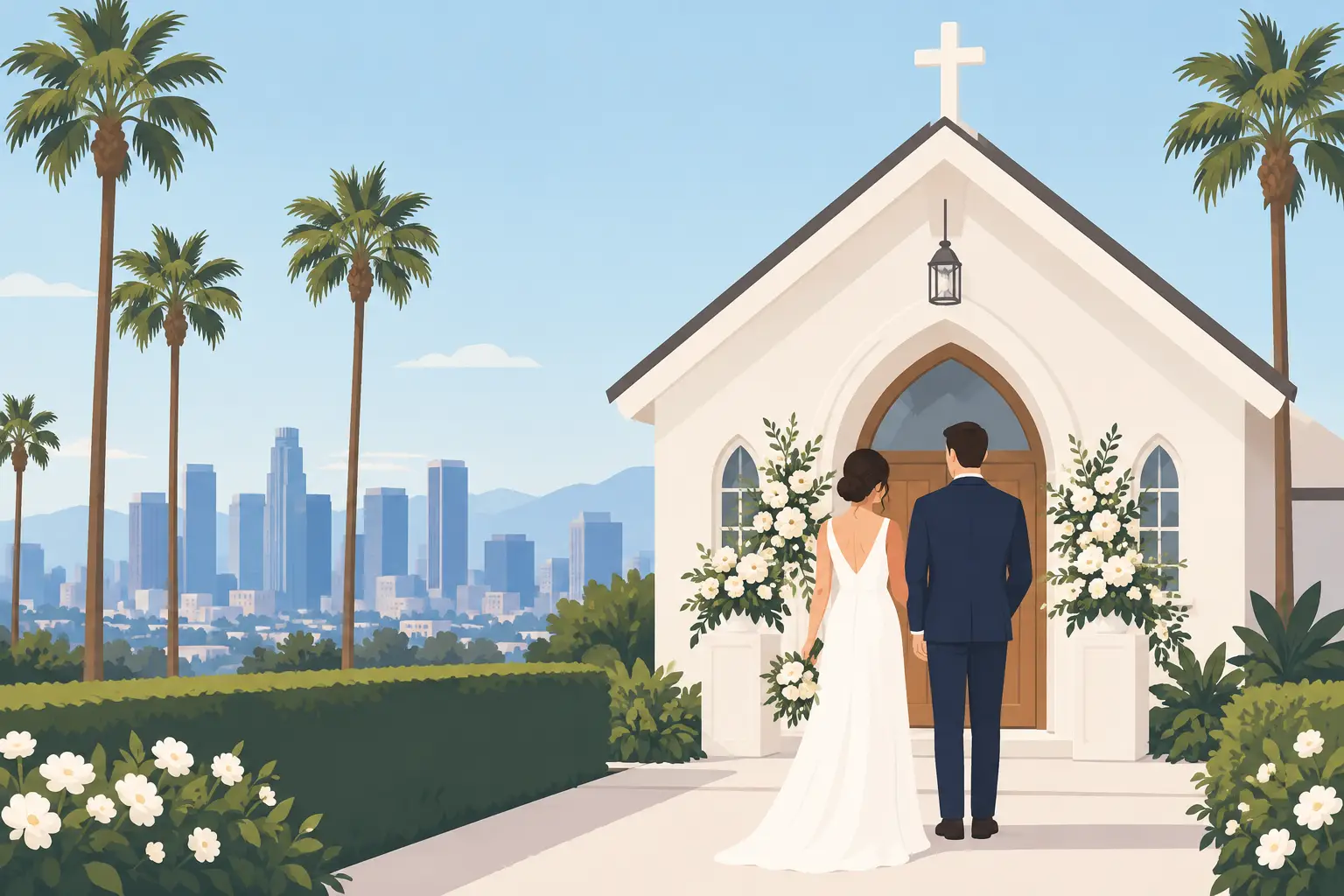
A chapel ceremony can be the right answer when the date matters more than the seating chart. Maybe you are visiting Los Angeles, facing a military deadline, planning a private elopement, or simply ready to stop waiting. When you book a chapel ceremony with the right authorized provider, you can turn a meaningful decision into a legal marriage without spending weeks chasing appointments, paperwork, and county office lines.
The key is choosing a service that handles more than a pretty room. Your marriage must include a valid California license, an authorized officiant, a legal ceremony, and proper recording with the county. A chapel should feel intimate and celebratory, but the legal details are what make your marriage official.
What Happens When You Book a Chapel Ceremony
A chapel ceremony is a focused, private alternative to a large traditional wedding or a crowded courthouse visit. You and your partner arrive, complete the required marriage licensing steps, exchange vows in a prepared setting, sign the marriage license, and have the ceremony performed by an authorized officiant.
For couples who need to get married today, the biggest advantage is coordination. Instead of making separate stops for a license, an officiant, and recording instructions, an end-to-end marriage service can organize those steps in one place. That means less time wondering what comes next and more time being present for the moment you are making.
The chapel experience does not have to feel rushed just because it is efficient. You may choose a simple legal ceremony, bring a few guests, exchange personal vows, or take photos afterward. The right format depends on your timeline and the kind of memory you want to create. A couple marrying before a deployment may prefer a quiet, immediate ceremony. A visiting couple may want a more photo-ready setting and time to celebrate afterward.
Start With the Legal Requirements
Before you reserve a time, make sure you can meet California’s basic marriage requirements. Both people must generally be at least 18 years old, legally free to marry, and able to appear for the licensing and ceremony process. Bring valid government-issued photo identification, such as a driver’s license, state ID, passport, or another accepted photo ID.
If either person has been married before, be prepared to provide accurate information about how and when the prior marriage ended. A divorce, death, or annulment must have legally ended the earlier marriage before a new one can take place. If your situation involves a recent divorce, an out-of-country document, a name discrepancy, or another unusual detail, ask questions before your appointment. A quick clarification can prevent a frustrating delay on a day that matters.
California offers different license types, and witness rules can vary. A public marriage license typically requires at least one witness at the ceremony, while a confidential marriage license follows different requirements. Your coordinator can explain which option fits your circumstances and whether you need to bring a witness or can arrange for one.
Do not assume that having an engagement ring, a wedding dress, or a venue reservation makes a marriage legal. The license and the completed, properly recorded ceremony are the foundation. Everything else is personal style.
Bring What You Need, Not a Folder Full of Guesswork
A well-run chapel appointment should make the preparation simple. In most cases, you will need your IDs, accurate personal information, and payment for the package you select. Bring any documents requested for your specific circumstances, and arrive with enough time to review the license carefully before signing.
Check the spelling of full legal names, dates of birth, places of birth, and parent information if it is requested on your license paperwork. Correcting an error later can create extra work and expense. This is one of the few moments where slowing down for two minutes can save a lot of time.
If you want to wear formal attire, bring bouquets, include rings, or read your own vows, confirm those details when booking. A chapel is designed to make a small ceremony feel special, but advance notice helps ensure the experience matches your expectations.
Choosing the Right Chapel Package
Not every couple needs the same level of ceremony. The best package is the one that meets your legal needs, fits your schedule, and gives you an experience you will feel good about afterward.
A basic legal ceremony may be ideal if you are on a tight timeline and want a private, efficient setting. An elopement-style chapel package can offer more room for photos, vows, and a few loved ones. A VIP-room option may make sense if privacy, comfort, or a more elevated setting matters to you. If a chapel does not fit your plans, mobile officiation may be better for a hotel, beach, home, or another permitted location.
Ask what the price includes. The most useful question is not simply, “How much is the ceremony?” Ask whether the package includes license issuance assistance, the officiant, the ceremony, county recording, and support for obtaining certified proof of marriage. A low advertised ceremony price can become less appealing if you still have to solve the legal steps somewhere else.
At Same-Day Marriage, couples can arrange the license, legal ceremony, county recording, and certified documentation support through one authorized process. That structure is especially valuable when you are trying to get married quickly without sacrificing legal certainty or a personal atmosphere.
How to Make a Same-Day Chapel Ceremony Feel Personal
Speed and meaning are not opposites. A ceremony can happen quickly and still reflect who you are as a couple. The secret is to choose one or two details that matter instead of trying to recreate a full-scale wedding in a few hours.
Write short vows on your phone or a note card. They do not need to be perfect. A few honest sentences about why you are choosing each other today will carry more weight than a long speech written under pressure. You can also exchange rings, play a meaningful song before or after the ceremony if the space allows, or invite the one or two people whose presence would make the day feel complete.
Plan for photos, even if you are keeping things simple. A chapel provides a clean, intentional setting that is often more flattering and private than a courthouse hallway. Wear what makes you feel confident, whether that is a suit and dress, jeans and a blazer, a uniform, or something entirely your own. There is no required look for a legally valid, deeply meaningful marriage.
For LGBTQ+ couples, international couples, and partners from other states, an inclusive chapel service can remove the uncertainty of navigating an unfamiliar system. Your relationship deserves clear answers, respectful treatment, and a ceremony that celebrates you without assumptions.
Timing, Recording, and Proof of Marriage
After the ceremony, the signed marriage license must be returned and recorded with the appropriate county office. Recording is the administrative step that completes the official public record of the marriage. Your officiant or marriage service should explain how that return happens and what to expect next.
A marriage license is not always the same thing as a certified marriage certificate. The license is completed during the legal process, while a certified copy is the document commonly needed later for name changes, benefits, immigration matters, insurance, military records, or other official purposes. If you need proof quickly, ask about certified-copy options before your ceremony, not after.
Timing can depend on the license type, county processing, and the documentation you need. Be direct about your deadline. If you are marrying before travel, a deployment, a hospital matter, or an immigration appointment, say so when you call. An experienced coordinator can tell you what is possible and help you avoid relying on assumptions.
Questions to Ask Before You Reserve
Before you commit, confirm that the provider is authorized to perform the service and ask whether both licensing and officiation can be completed at the appointment. Clarify what identification is accepted, whether a witness is required, how many guests may attend, how long the appointment lasts, and what happens after you sign the license.
Also ask about timing. Can you book today? Is there a cut-off time? Can the provider accommodate Spanish-language officiation, military needs, same-sex couples, or visitors from outside California? Clear answers are a good sign. Vague promises are not.
A chapel ceremony is not a shortcut around marriage law. It is a better way to move through the legal process when you want it handled with care, speed, and respect. Bring your identification, choose the experience that feels right, and leave room for one quiet moment together before the ceremony begins. The paperwork makes the marriage legal, but that moment is where the day becomes yours.