
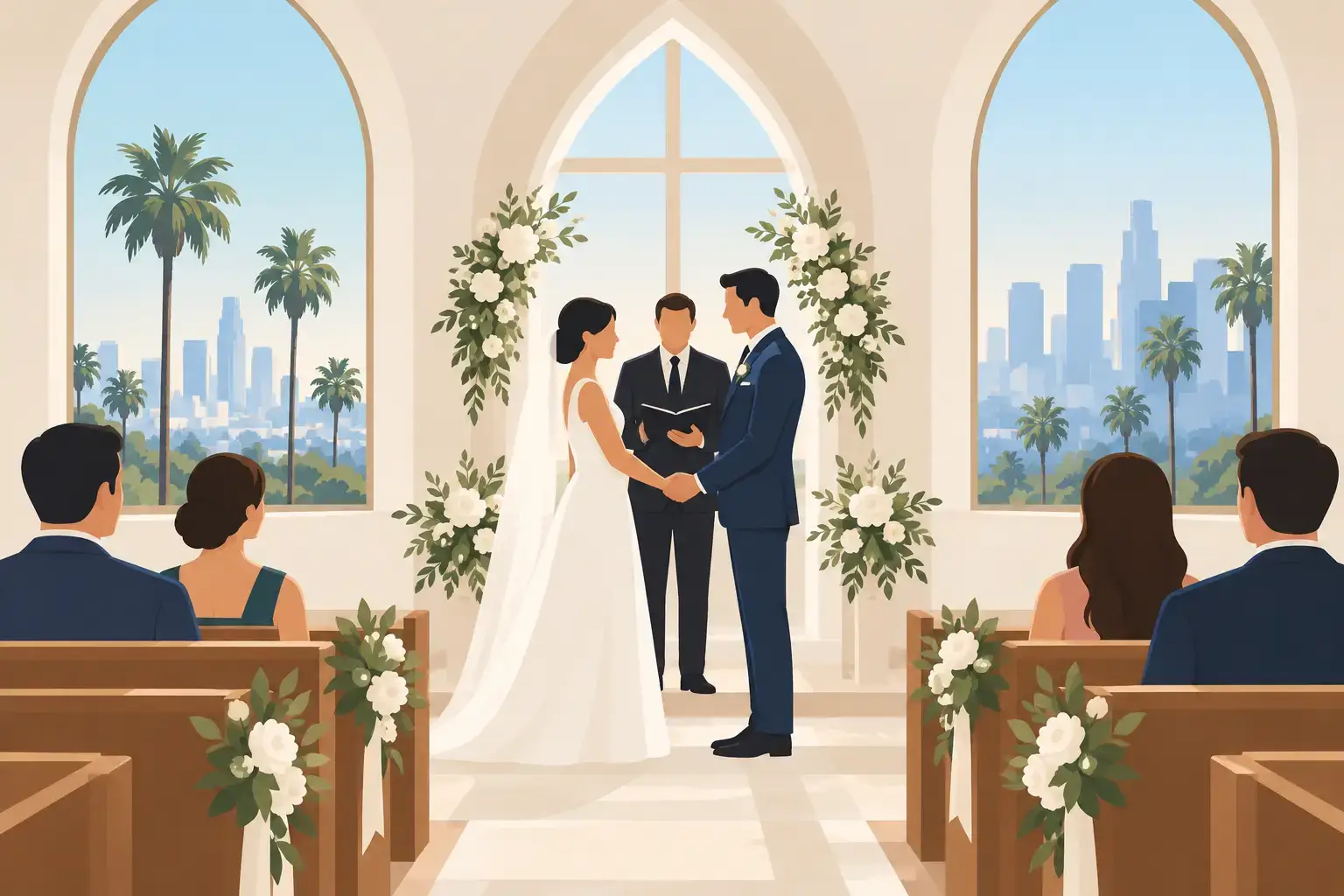
A chapel ceremony can be small without feeling rushed, and legal without feeling like a courthouse errand. This intimate chapel ceremony guide is for couples who want to get married today in Los Angeles with privacy, warmth, and a clear path from marriage license to recorded marriage.
Maybe you are planning an elopement, visiting Southern California, facing a military, immigration, insurance, or family deadline, or simply ready to stop waiting. You do not need a ballroom, a year-long planning timeline, or a crowd to make the moment real. You do need the legal steps handled correctly.
What an Intimate Chapel Ceremony Can Be
An intimate chapel ceremony is a legal wedding in a private, photo-friendly setting designed for a small number of people. It can be just the two of you, or it can include a few loved ones who matter most. The scale is smaller, but the commitment is not.
For many couples, a chapel solves the tension between wanting something meaningful and needing it completed quickly. You can exchange vows, hold hands, take a breath, and hear yourselves say “I do” without managing a venue contract, seating chart, catering count, or courthouse line.
The best format depends on your priorities. If privacy is everything, a couple-only ceremony may feel right. If you want your parents, children, or closest friends present, choose a setting with room for a small gathering. If you have a location that already carries meaning – a hotel suite, backyard, beach, or scenic overlook – a mobile ceremony may be a better fit than a chapel.
Start With the Legal Marriage Plan
A beautiful ceremony only becomes a legal marriage when the license, officiation, and recording requirements are handled correctly. In California, the order matters: obtain the appropriate marriage license, complete the ceremony before the license expires, ensure the officiant completes the license accurately, and have the completed license submitted for county recording.
This is where couples often lose time. A county process can involve separate appointments, office hours, documentation questions, an officiant search, and a wait for proof of marriage. An authorized end-to-end marriage service can coordinate the license and ceremony in one place, then handle the recording process so you are not left wondering what happens after the vows.
Bring valid government-issued photo identification and be ready to provide the personal information required for the marriage license. Requirements can differ based on the license type and your circumstances, so do not assume that an out-of-state residence, international passport, prior marriage, or short timeline prevents you from marrying in Los Angeles. Couples from any U.S. state and many countries can legally marry in California when their paperwork is in order.
Choose the Right License Type
California offers public and confidential marriage licenses. A public marriage license generally requires at least one witness at the ceremony, while a confidential marriage license has separate eligibility rules and does not require witnesses. Your choice affects privacy, ceremony logistics, and how records are accessed later.
Do not choose based only on the word “confidential.” Choose based on eligibility and what you want your day to look like. A knowledgeable marriage provider can explain the practical difference before the ceremony begins, including whether you need a witness and what identification or declarations may be required.
Confirm What Proof You Need Today
Some couples need more than the reassurance of a completed ceremony. They may need certified proof of marriage quickly for a military order, name-change planning, benefits paperwork, travel-related documentation, or a personal deadline.
Ask early what document you need and when you need it. A ceremonial certificate is meaningful for display, but it is not always the same as a county-certified copy. When time matters, choose a service that can explain the difference clearly and support the county recording and certified-document process from the start.
Make the Ceremony Feel Like Yours
The intimate part of a chapel ceremony is not just the guest count. It is the freedom to remove everything that does not belong to you.
You can wear a wedding dress, suit, jeans, a cultural outfit, military uniform, or something you bought that morning because it made you feel like yourself. Bring rings if you have them, but do not panic if you do not. Rings are a personal tradition, not the legal requirement that makes the marriage valid.
Your ceremony can be brief and heartfelt, or it can include personal vows, a reading, a ring exchange, and a moment for photos. If you are nervous, keep the language simple. You do not need to perform for a room. You only need words that sound true when you say them to each other.
A useful approach is to decide on three things before you arrive: whether you want traditional or personal vows, whether anyone will attend, and whether you want photos before or after the ceremony. Those decisions create structure without turning a spontaneous wedding into a production.
Plan for a Smooth Same-Day Experience
Same-day marriage is fast, but it should not feel chaotic. Give yourselves enough time to arrive, review documents, ask questions, and settle into the moment. Rushing through traffic in formalwear is not the romantic memory most couples want.
Before leaving, check that both partners have their identification, any required information related to prior marriages, your rings if you are using them, and a payment method for your selected package or document services. If guests are joining you, tell them the arrival time and keep the group small enough to preserve the relaxed experience you chose.
If one partner is more comfortable in Spanish, ask for Spanish-language officiation in advance. If you are active-duty military or working around deployment timing, say so when booking. If you are an LGBTQ+ couple, you should expect the same respectful, fully legal service and the freedom to shape the language of your ceremony around who you are.
At Same-Day Marriage, couples can combine an authorized marriage license, legal ceremony, county recording support, and certified proof options in one coordinated visit. That means less time moving between offices and more time being present for the reason you came.
Keep the Guest List Small on Purpose
An intimate chapel wedding works best when the people in the room add comfort rather than pressure. Invite the people who will celebrate you, not the people you feel obligated to manage.
If family dynamics are complicated, a private legal ceremony now and a larger celebration later can be the kindest option for everyone. You are not “skipping” your wedding. You are choosing the part that cannot wait, then creating the celebration you want when timing and budget allow.
For couples bringing children, an intimate ceremony can be especially moving. Let them participate in a way that suits their age: carrying rings, standing nearby, offering a hug after the vows, or simply being included in photos. There is no need to force a formal role.
Give Yourselves a Moment After “I Do”
Do not let the paperwork be the last thing you remember. Plan one small celebration immediately afterward: lunch at a favorite restaurant, a walk somewhere beautiful, photos in the clothes you got married in, or a quiet phone call to someone you love.
An intimate chapel ceremony is proof that a wedding does not need to be large to be deeply felt. When the legal details are handled with care, you can stop managing the process and start living the moment you chose together.