
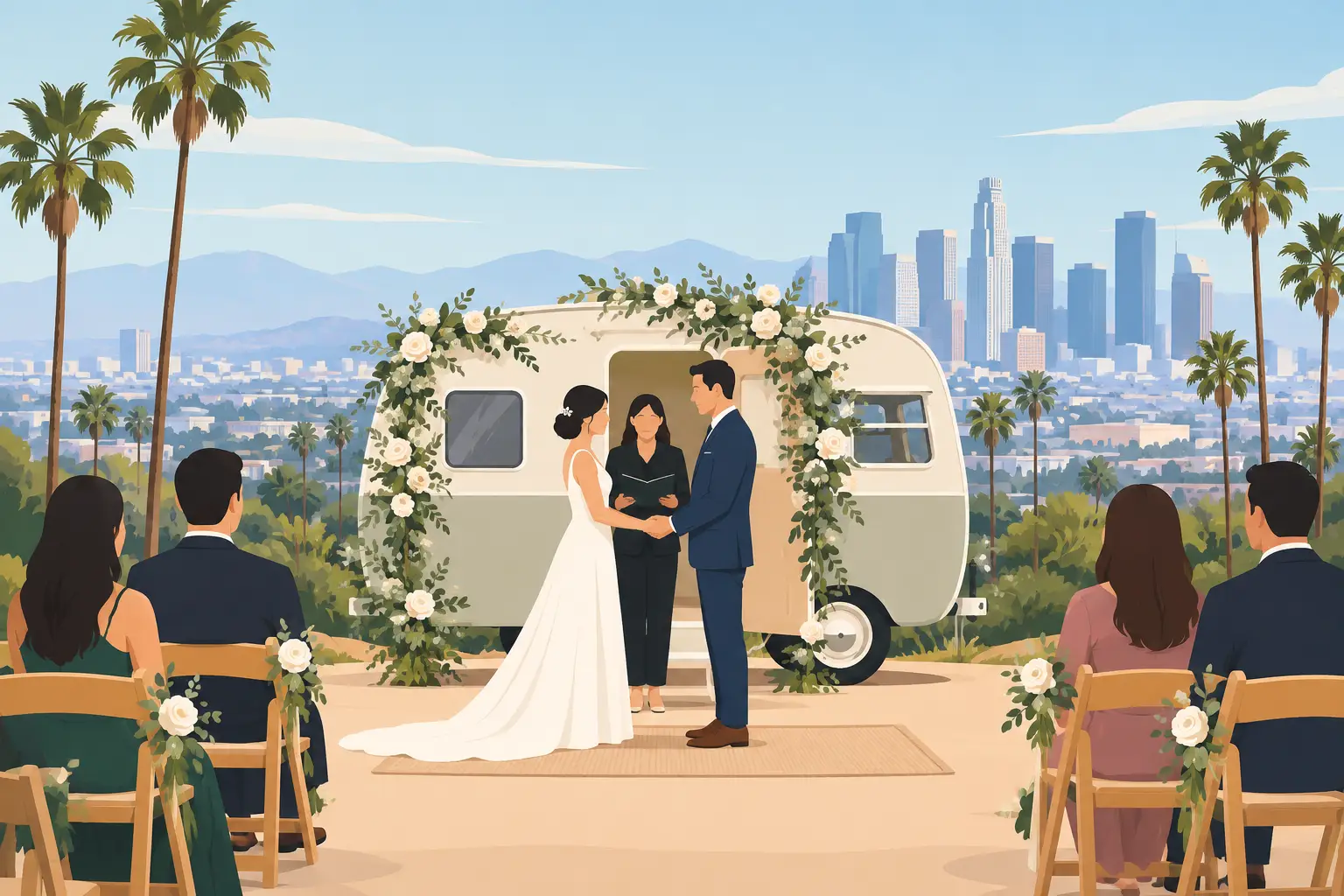
A mobile wedding can begin with a view, a backyard, a hotel suite, or the place where you had your first date. But the location is only one part of getting legally married. If you are wondering how to plan a mobile wedding, the fastest path is to coordinate the legal license, an authorized officiant, the ceremony location, and county recording as one clear plan.
For couples facing a deployment, travel deadline, immigration timing, family emergency, or simply a decision that cannot wait, a mobile ceremony can be both deeply personal and legally complete. The key is not treating it like a traditional wedding moved outdoors. Treat it as a legal marriage first, then build a meaningful celebration around it.
Start With the Legal Marriage Requirements
In California, a marriage becomes legal through more than saying vows. You need a valid California marriage license, an authorized person to perform the ceremony, and a completed marriage license returned for recording. A beautiful ceremony without the correct paperwork is not enough.
Both partners generally need to appear in person to obtain the license and show acceptable government-issued identification. California does not require a blood test or a waiting period after the license is issued. Once issued, a public marriage license is valid for 90 days anywhere in California, giving you flexibility if your preferred mobile ceremony location is in Los Angeles or another part of Southern California.
The details matter, especially when time is short. Confirm the exact names you want reflected on the license, bring current ID, and be candid about any document questions before the appointment or ceremony. International couples and couples visiting from another state can marry in California, but identification and documentation should be reviewed early so there are no day-of surprises.
A confidential marriage license may also be an option for couples who meet California’s requirements and want greater privacy. It is not the right choice for every couple, so ask how the license type affects access to the record and future certified copies before deciding.
Choose a Location That Works for a Legal Ceremony
The best mobile wedding locations are meaningful, practical, and realistic about access. A beach ceremony may look effortless in photos, but it can involve parking, wind, crowds, permit rules, and a long walk for a family member. A private home may offer privacy and comfort, but you still need a quiet, safe place for the ceremony and witnesses if your license requires them.
Before committing to a location, think through four issues: permission, privacy, timing, and weather. Public parks, beaches, rooftops, restaurants, and hotels may require a reservation or event permit. Some locations allow a small ceremony but limit professional photography, amplified music, chairs, arches, or gatherings of a certain size.
If you want to marry today, choose simplicity. A scenic overlook, private residence, hotel room, vacation rental with owner approval, or intimate restaurant space can be easier to organize than a major public site. Keep a backup location in mind. Los Angeles traffic, coastal weather, and popular event spaces do not always follow a schedule.
Ask About Travel and Setup Before You Book
A mobile officiant needs enough time to arrive, park, meet the couple, complete the license correctly, and perform the ceremony without rushing. Share the full address, parking instructions, gate codes, venue contact, ceremony start time, and any access restrictions in advance.
You do not need a full wedding production to create a memorable moment. A small bouquet, a playlist played from a phone, a few guests, and vows that sound like you can be more powerful than a complicated setup. If photos matter, schedule the ceremony when the light is flattering and allow a few minutes afterward for portraits before everyone leaves.
How to Plan a Mobile Wedding on a Short Timeline
The fastest mobile weddings succeed because the couple makes a few decisions quickly and lets the legal process guide the rest. Start by selecting a date and a time window, then choose whether the ceremony will be private, include a few loved ones, or involve a larger group. That decision affects the venue, travel needs, witness arrangements, and the amount of coordination required.
Next, secure a service that can handle the marriage license and legal ceremony together. This eliminates the common problem of obtaining a license in one place, searching for an available officiant somewhere else, and later wondering whether the completed license was returned properly. Same-Day Marriage can coordinate license issuance, an authorized ceremony, county recording, and certified proof of marriage while bringing the ceremony to an approved client-selected location.
Then finalize the ceremony format. A mobile ceremony can be as brief as a legal exchange of consent and rings, or it can include personal vows, readings, family participation, and a bilingual Spanish-language officiation. The legal core must be present, but the words around it can reflect your relationship.
If your ceremony needs to happen immediately, do not wait until the morning of to make every choice. Decide whether you will exchange rings, whether you want guests on video, and whether you want personal vows. Write a few sentences, not a speech. The goal is to be present with each other rather than trying to stage a perfect production under pressure.
Do Not Overlook Witnesses and the Marriage License
Witness rules depend on the type of California marriage license you use. A public marriage license requires at least one witness signature and allows space for a second. A confidential marriage license does not require a witness. Your officiant can explain what applies to your license and help you avoid a paperwork mistake.
Make sure the names and signatures on the license are completed carefully. This is not a decorative keepsake. It is the legal record that must be returned to the county for recording. Correcting errors after a ceremony can create delays and extra work, which is exactly what most couples choosing a mobile wedding are trying to avoid.
Ask in advance what happens after the ceremony. Who submits the completed license? When is it recorded? How do you obtain certified copies for a name change, benefits enrollment, military paperwork, immigration matters, insurance, or other official needs? A provider should answer these questions directly, not leave you to figure out the next step after the celebration ends.
Build a Ceremony That Still Feels Like Yours
Speed does not make your marriage less meaningful. In fact, many couples choose a mobile wedding because it removes the noise around the commitment. There is no pressure to satisfy a guest list of 200, spend months comparing linens, or delay a decision that already feels right.
Choose one or two personal elements and let them carry the experience. You might read letters to each other, invite your children to stand beside you, use family rings, include a short prayer, or ask a friend to take photos. For LGBTQ+ couples, military couples, international visitors, and couples blending families, a small mobile ceremony can create a more comfortable and affirming space than a formal courthouse process.
There are trade-offs. A remote beach at sunset may be romantic but difficult for guests. A quick hotel ceremony can be private and convenient but may not have the scenery you imagined. Decide what matters most: immediate legal completion, privacy, the ability to include loved ones, or a specific backdrop. You can always plan a larger celebration later. The legal marriage does not have to wait for the party.
Plan for Proof of Marriage, Not Just the Moment
After the vows, your marriage license is returned for county recording. A certified copy of the marriage record is the document many institutions will require later. Your commemorative certificate or ceremony photos may be meaningful, but they are not always accepted for legal or administrative purposes.
If you need documentation quickly, say so before booking. Couples often need certified proof for urgent reasons, including a military deadline, travel-related paperwork, health insurance, or a name-change process. Knowing the timeline and available certificate options before the ceremony gives you confidence that the legal side will be handled with the same care as the vows.
Your mobile wedding does not need months of planning to be real, beautiful, and legally complete. Pick the place that feels like you, get the legal details handled by people who know the process, and leave room for the one thing no checklist can create: the moment you look at each other and choose a life together.