
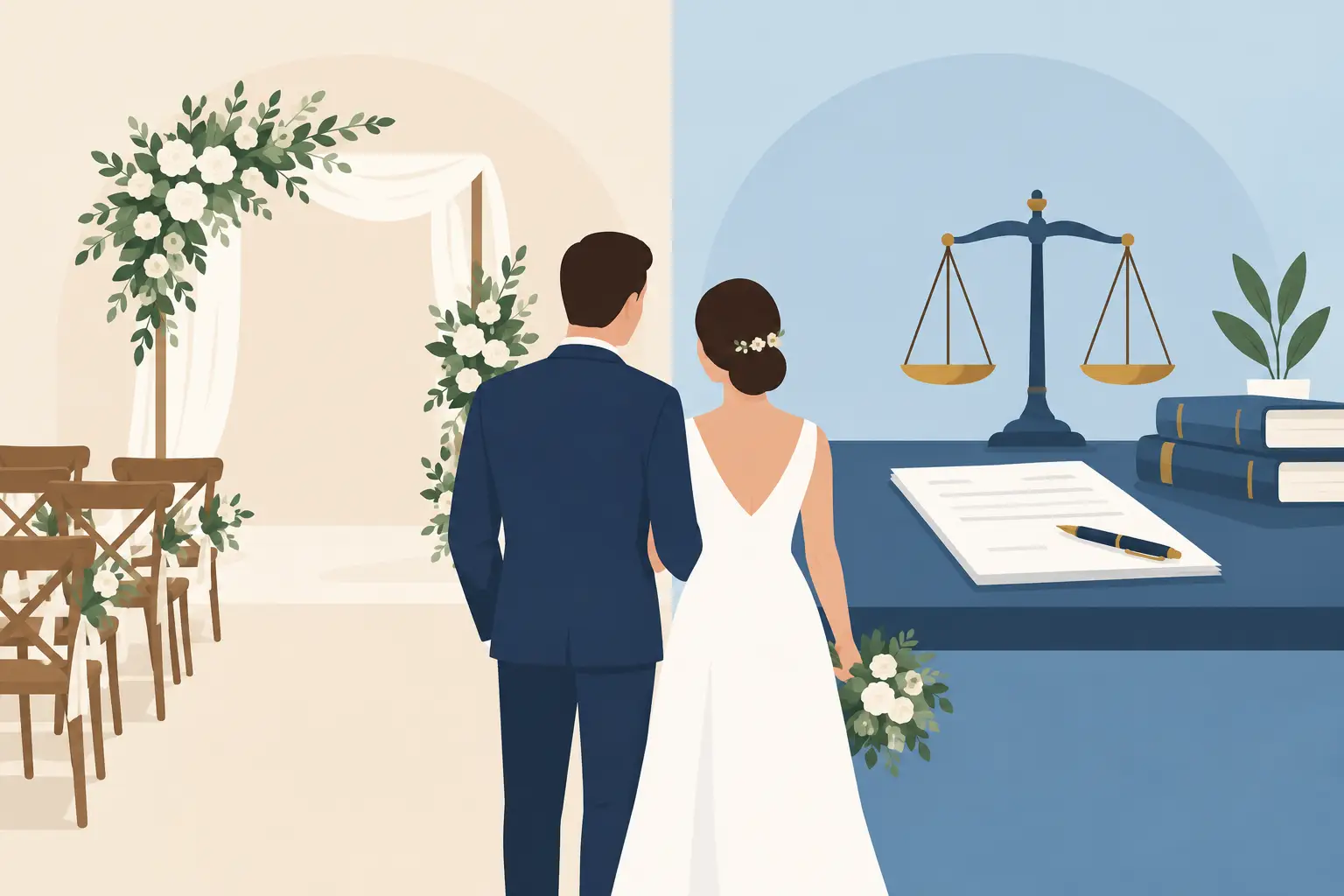
A beautiful ceremony can feel completely real, but legal versus symbolic is not a question of how emotional the moment was. It is a question of paperwork, authorization, and whether the State of California recognizes you as married when the ceremony ends. For couples who need a spouse added to benefits, immigration documents, military records, insurance, or any official form, that distinction matters immediately.
A symbolic ceremony can be deeply personal, private, and photo-worthy. A legal marriage ceremony can be all of those things too. The difference is that only one creates a legally recognized marriage without another step.
What makes a marriage legal in California?
A legal marriage is not created simply because two people exchange vows, wear rings, or call each other husband and wife. In California, the process begins with a valid marriage license issued before the ceremony. The couple must then participate in a ceremony performed by an authorized officiant while the license is valid.
After the ceremony, the completed marriage license must be properly signed and returned for recording with the appropriate county office. This administrative step is what connects your ceremony to the official public record. Once recorded, you can request certified copies of your marriage record for agencies that require formal proof.
The order matters. A romantic ceremony before a license is issued may be meaningful, but it is not the legal act of marriage. Likewise, having a license without completing a proper ceremony does not make you married. The license, authorized officiation, completed documents, and county recording process work together.
For most California public marriage licenses, the ceremony must take place before the license expires. Couples should also understand that a keepsake certificate handed to them after a ceremony is different from a government-certified copy of the recorded marriage record. Both can be valuable, but they serve different purposes.
Legal versus symbolic: the practical difference
A symbolic ceremony is a commitment ceremony with no direct legal effect. It may include vows, readings, a ring exchange, music, family, an officiant, and every visual detail of a wedding. It can happen anywhere that works for the couple, subject to venue rules. But it does not require a marriage license, and it does not result in a county marriage record.
That makes symbolic ceremonies a good fit for some situations. A couple may already be legally married and want a larger celebration later. They may have completed the legal process privately, in another state or country, and now want to share their vows with loved ones in Los Angeles. They may also be planning a destination ceremony while handling the legal marriage at home.
A legal ceremony, by contrast, is both a celebration and a legal transaction. The officiant is not just leading a meaningful moment. They are completing an authorized role in the marriage process and ensuring the documents are handled correctly.
Neither choice is more romantic. The right choice depends on what you need the day to accomplish.
When a legal ceremony is the right choice
Choose a legal ceremony when you need your marriage to be official now. This is often the best route for couples facing a deadline or simply ready to stop waiting. You may need legal proof to enroll a spouse in health coverage, make military housing or benefits changes, support an immigration filing, update a name, establish next-of-kin status, or complete other time-sensitive paperwork.
It is also the right choice if you are eloping and want the entire commitment handled in one experience. You do not have to choose between a personal ceremony and valid documentation. An intimate chapel ceremony, a private VIP-room ceremony, or a mobile ceremony at a meaningful location can still include your own words, rings, photos, and the people you want present.
For couples who want to get married today, convenience should never mean cutting legal corners. Confirm that the provider can issue or arrange the valid license process, provide an authorized officiant, complete the marriage documents, submit them for county recording, and explain how you will receive proof of marriage.
When a symbolic ceremony makes more sense
A symbolic ceremony is often the better choice when the legal marriage has already happened or will happen separately. Many couples prefer this option for a vow renewal, anniversary celebration, destination wedding, or family gathering where the legal paperwork would create unnecessary travel or timing pressure.
It can also give you more flexibility. If a close relative cannot attend the date you legally marry, you can have a symbolic celebration later without changing your legal marriage date. If you want a friend to lead the ceremony but they are not authorized to officiate a legal marriage, they can still take a meaningful role in a symbolic event.
The trade-off is simple: you cannot use a symbolic ceremony as proof that you are legally married. If legal status is the goal, plan the license and authorized ceremony first, even if your larger celebration happens another day.
Can you have both without losing the magic?
Absolutely. Many couples separate the legal act from the public celebration on purpose. They complete a short legal ceremony with the required documents, then hold a symbolic ceremony later with a longer script, personal readings, family participation, and a reception. Others do both on the same day, with the legal signing integrated naturally into the ceremony.
This approach is especially useful for couples with different priorities. One partner may need immediate legal proof for a deadline, while the other has dreamed of celebrating with friends and family. There is no rule that says your legal ceremony must look like a courthouse appointment or that your symbolic celebration is somehow less sincere.
The key is clarity. Tell your officiant which portion is legal, make sure the license is completed correctly, and do not assume a ceremonial certificate replaces a certified government record.
What same-day legal marriage should include
A fast marriage service should remove delays, not remove safeguards. Ask direct questions before you book: Can you obtain a California marriage license through this process? Is the officiant authorized? Will the ceremony meet California requirements? Who returns the completed license for recording? How and when can you obtain certified proof of marriage?
At Same-Day Marriage, couples can combine licensing, a legal ceremony, county recording support, and certified-document guidance in one coordinated experience. That is particularly helpful when you are visiting Los Angeles, serving in the military, planning a private LGBTQ+ elopement, or working against a real deadline. A streamlined process should still leave room for a moment that feels like yours.
Bring the identification and information requested in advance, arrive prepared, and be honest about your timeline. International couples, couples with prior marriages, and anyone needing documents for a specific agency may have extra questions. Getting those answered before the ceremony protects your schedule and prevents last-minute surprises.
Avoid the misunderstandings that cause delays
The most common mistake is assuming that a ceremony itself changes your legal status. It does not unless the legal requirements are in place. Another frequent issue is treating every marriage document as interchangeable. A decorative certificate may be perfect for a frame, while a certified copy is what an employer, court, insurer, or government agency may request.
Venue location can matter too. A legal ceremony must follow the rules attached to the license and jurisdiction. If you are considering a beach, hotel suite, park, home, or other mobile location, confirm the plan with your marriage provider before you promise guests a time and place.
Finally, do not confuse speed with lack of planning. Same-day marriage is possible because the process is organized, not because the legal steps disappear. The right team keeps the process moving while protecting the validity of the marriage you are creating.
If you are ready for your marriage to count today, choose the legal path and make the ceremony personal. Your vows deserve the joy of the moment and the certainty that your new marriage is recognized when you walk out the door.