
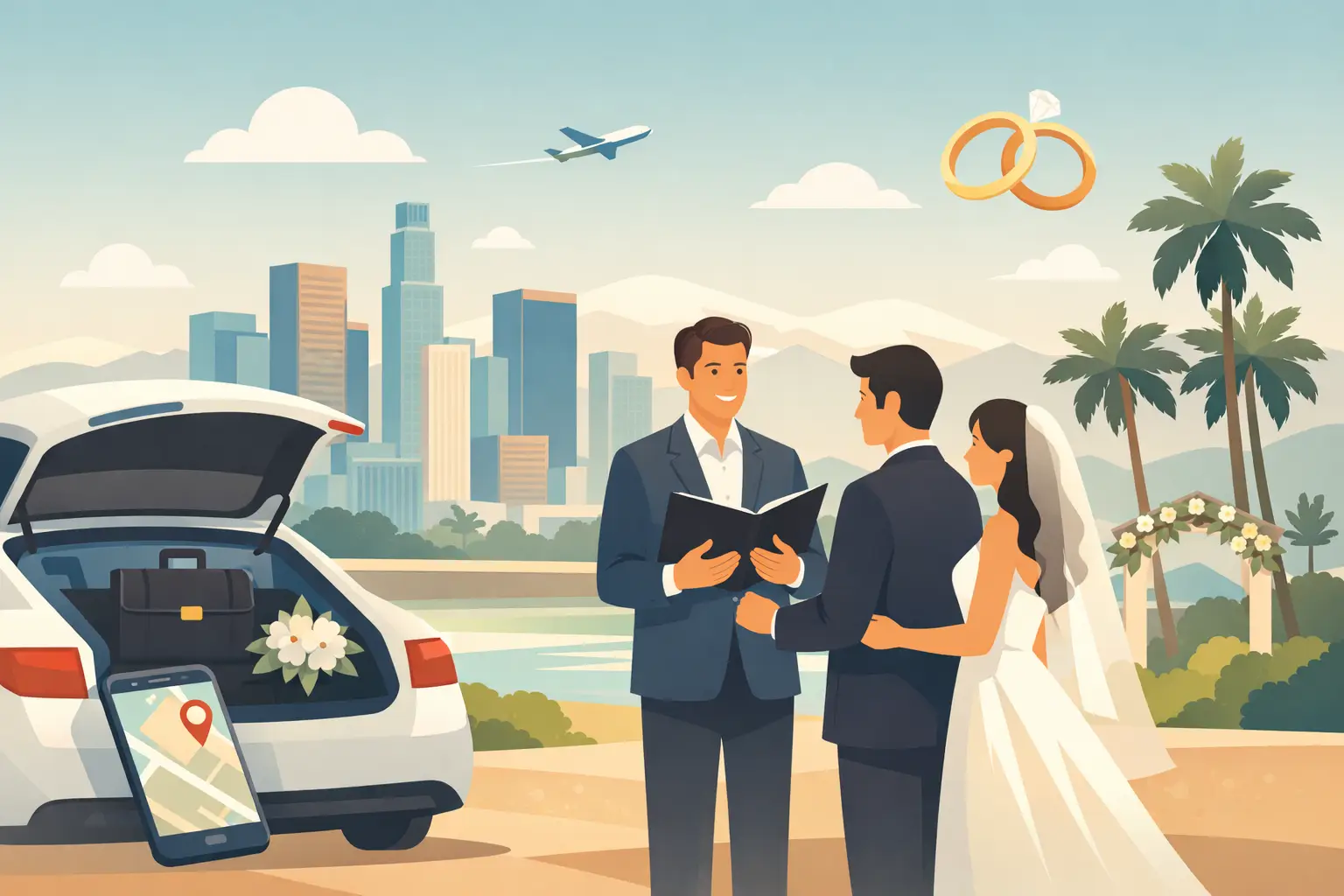
A proposal can happen in a restaurant, on a sunset overlook, at home with your closest people, or while you are visiting Los Angeles for one unforgettable weekend. The legal marriage should not force that moment into a courthouse line. A mobile wedding officiant brings the ceremony to the place that fits your story while helping ensure the marriage is completed correctly.
For couples who need to get married today, location flexibility is only part of the value. The bigger question is whether your license, ceremony, signatures, county recording, and proof of marriage are handled in the right order. When time matters, a beautiful ceremony is not enough. You need a legally valid marriage with a clear path to documentation.
What a Mobile Wedding Officiant Actually Does
A mobile wedding officiant travels to your chosen location and performs your legal marriage ceremony. That location might be a private residence, hotel suite, rooftop, beach, park, restaurant, or a meaningful spot where you first met. The ceremony can be brief and simple, or it can include personal vows, rings, readings, family participation, and photos.
But officiation is only one piece of getting legally married in California. Before the ceremony, you need the correct marriage license. During the ceremony, the required parties must sign the license correctly. Afterward, the completed license must be returned for county recording. That recorded marriage is what allows you to request certified copies when you need proof for immigration, insurance, name changes, military benefits, or other official purposes.
This is why couples should ask more than, “Can you marry us at our location?” Ask who is coordinating the legal process, whether the officiant is authorized, how the license will be handled, and what happens after the ceremony. A mobile service should make the experience feel easy without leaving you to solve the paperwork alone.
When a Mobile Wedding Officiant Is the Right Choice
Mobile ceremonies are especially useful when the setting is part of the reason you are marrying now. Maybe you are planning a private elopement and do not want a public courthouse experience. Maybe a parent, grandparent, or loved one cannot easily travel. Maybe you are active-duty military with limited leave, visitors with a short Los Angeles stay, or a couple working around an urgent personal deadline.
They also work well for couples who want intimacy without the expense and planning burden of a large wedding. A legal ceremony at a favorite Los Angeles location can be deeply personal, photo-worthy, and remarkably efficient. You do not need a ballroom, a year of vendor planning, or a guest list of 150 to make the commitment real.
There are trade-offs to consider. A courthouse-style ceremony may be the most straightforward option if you want the simplest possible setting and do not care where the vows happen. A mobile ceremony involves travel, timing, access to the location, and sometimes venue or park rules. If you choose a public place, you may need to consider crowds, parking, weather, photography restrictions, and permits. The best location is not always the most famous one. It is the one that is practical, meaningful, and available when you need it.
How to Plan a Legal Mobile Ceremony in Los Angeles
The fastest way to reduce stress is to begin with the legal requirements, then shape the ceremony around them. Your location can be romantic and spontaneous, but your marriage paperwork must be precise.
Start with your license plan
A California marriage ceremony requires a valid California marriage license. Couples often assume they can bring a license from another state or obtain one after the ceremony. That is not how it works. The license needs to be issued before the legal ceremony takes place.
If you need a same-day marriage, choose a provider that can coordinate license issuance and officiation as part of one authorized process. Same-Day Marriage can help couples complete the license, ceremony, county recording, and certified-documentation support without making separate courthouse appointments. This is particularly helpful when you are traveling, facing a deadline, or simply want one clear point of contact.
Bring valid government-issued photo identification and be ready to provide accurate personal information. Previous marriage details, if applicable, should be discussed in advance so there are no surprises on the day. Requirements can vary depending on the type of license and your circumstances, so do not guess or rely on social media advice.
Choose a location with a real arrival plan
A great ceremony location needs more than a good view. Think through where everyone will meet, how long it takes to park, whether the location is open at your preferred time, and whether it offers enough privacy for the moment you want. At a hotel, confirm that outside vendors and ceremonies are permitted. At a beach or park, check whether your group size, décor, chairs, amplified music, or photography plans require approval.
For a truly last-minute wedding, private locations are often the easiest. A home, hotel room, vacation rental with permission, or reserved private space can offer more control over timing and privacy. If you choose an outdoor location, build in a backup plan. Los Angeles sunshine is famous, but wind, heat, traffic, and unexpected crowds can change the atmosphere quickly.
Decide what kind of ceremony feels like you
A legal marriage ceremony does not have to sound generic. Some couples want a two-minute exchange of consent and rings before dinner. Others want a short ceremony with personalized vows and a few loved ones standing close by. Both are valid choices.
Tell your officiant whether you want religious, secular, spiritual, bilingual, or Spanish-language officiation. Let them know if you are blending families, honoring cultural traditions, including children, or keeping the event entirely private. A professional officiant can make a brief ceremony feel intentional rather than rushed.
If you are using a public marriage license, witness requirements apply. Your ceremony coordinator can explain who needs to be present and where the signatures belong. Do not leave signing to the end of a busy celebration without guidance. A missing or incorrect signature can create avoidable delays.
Know what happens after “I do”
Once the ceremony is complete, the marriage license must be returned to the appropriate county office for recording. Recording is a critical step. Your marriage is legally effective after a valid license and ceremony, but a recorded license creates the official record needed for certified copies.
Ask your provider how and when the completed license is submitted, what proof you will receive, and how certified copies are requested or supported. Couples often need official copies sooner than expected, especially when handling benefits, travel documentation, employment records, financial accounts, or a legal name change.
Questions Worth Asking Before You Book
Before choosing a mobile wedding officiant in Los Angeles, confirm that the provider can answer practical questions clearly. You should know whether travel is included, what locations are within the service area, whether same-day appointments are available, how long the ceremony takes, and what happens if your chosen site is inaccessible.
Also ask whether the service includes help with the marriage license, whether county recording is handled, and how you can obtain certified copies. Price matters, but the lowest ceremony-only price can become less convenient if you still need to arrange licensing, recording, and document support somewhere else.
For international couples and couples from other US states, it is especially important to work with a provider that understands California requirements and can explain the process in plain language. You do not need to be a California resident to marry in California, but you do need the correct California license and a properly completed ceremony.
Make the Day Feel Easy, Not Rushed
A fast marriage does not have to feel impersonal. Plan a little space around the ceremony: arrive early, choose your music, write a few lines to each other, and assign one person to hold rings and IDs. If photos matter, schedule them before or after the legal portion so you can stay present when the vows begin.
The right mobile wedding officiant gives you something rare: speed without cutting corners. You can marry where it feels right, handle the legal details with confidence, and leave the day with more than beautiful pictures. You leave knowing your next chapter has officially begun.